A Dermatologist Explains What Is Really Happening
Cortisol is quietly wrecking your skin barrier, deepening your dark spots, and stealing your glow. Here is what the science says and exactly how to fight back.
April is Stress Awareness Month and while conversations about stress tend to focus on mental health, there is a quieter story unfolding on your skin every single day. Chronic stress does not just live in your mind. It shows up on your face.
As a board-certified dermatologist, I see the evidence in my practice constantly. Patients come in with sudden breakouts, persistent dullness, stubborn dark spots that will not fade, or a moisture barrier that feels completely depleted. More often than not, stress is the invisible culprit sitting right at the root of it all.
The Science: How Stress Affects Your Skin
When you are stressed, whether from a high-pressure workday, poor sleep, or the relentless scroll through social media, your body releases cortisol, the primary stress hormone. In small doses, cortisol is useful. Sustained over time, it becomes destructive, particularly to your skin.
Disrupted Hydration
Elevated cortisol impairs the skin’s ability to retain moisture by weakening the lipid barrier, leading to persistent dryness and dehydration.
|
Compromised Skin Barrier
Chronic stress degrades ceramide production, the core building block of a healthy skin barrier, leaving skin reactive, sensitized, and prone to irritation.
|
Worsened Hyperpigmentation
Stress triggers melanocyte-stimulating hormone activity, increasing melanin production and making dark spots and uneven skin tone more pronounced.
|
Increased Inflammation
Stress activates inflammatory pathways, exacerbating conditions like acne, eczema, rosacea, and generalized redness across the face.
|
The good news is that you have more power over this cycle than you might think, both through the lifestyle habits you build and the ingredients you choose to apply to your skin.
5 Science-Backed Ways to Lower Stress and Protect Your Skin
There is no shortage of stress-reduction advice out there, but not all of it has the science to back it up. Here are five approaches that are genuinely supported by research and that happen to benefit your skin directly.
-
Deep Breathing: Just five minutes of intentional deep breathing has been shown to measurably reduce physiological stress arousal. It lowers your heart rate and suppresses the sympathetic nervous system, the very system that spikes cortisol. Try box breathing: inhale for 4 counts, hold for 4, exhale for 4, and hold again for 4. Repeat between tasks or before bed.
-
Daily Low-Intensity Movement: A 10-minute walk, especially outdoors, triggers the release of endorphins and serotonin while reducing amygdala activity, the brain region most responsible for stress and rumination. Yoga and cycling achieve similar results without the cortisol spike that high-intensity workouts can cause in the short term.
-
Reduce or Eliminate Caffeine: Caffeine blocks adenosine and directly elevates cortisol and adrenaline. If your skin is reactive, dehydrated, or prone to hyperpigmentation flares, your morning coffee habit may be worth reconsidering. Try a herbal alternative for two weeks and pay close attention to how your skin responds.
-
Read a Book (Seriously): Immersive reading, particularly fiction, signals safety to your nervous system, lowering heart rate and improving skin temperature regulation, a sign that your body has shifted out of fight-or-flight mode. It is one of the most underrated self-care rituals for skin health.
-
Limit Screen Time Before Bed: Blue light and the constant stimulation of scrolling activate stress pathways in the brain. A screen-free wind-down routine does not just improve sleep quality. It directly reduces overnight cortisol levels, giving your skin the uninterrupted repair time it needs to restore and regenerate.
Your Skincare Should Work With You And Against Stress
Lifestyle habits address stress at the source. But your skincare routine plays a critical supporting role, especially when it comes to repairing what stress leaves behind. These are the two products I formulated specifically to address the most common stress-related skin concerns: a compromised skin barrier and persistent hyperpigmentation.
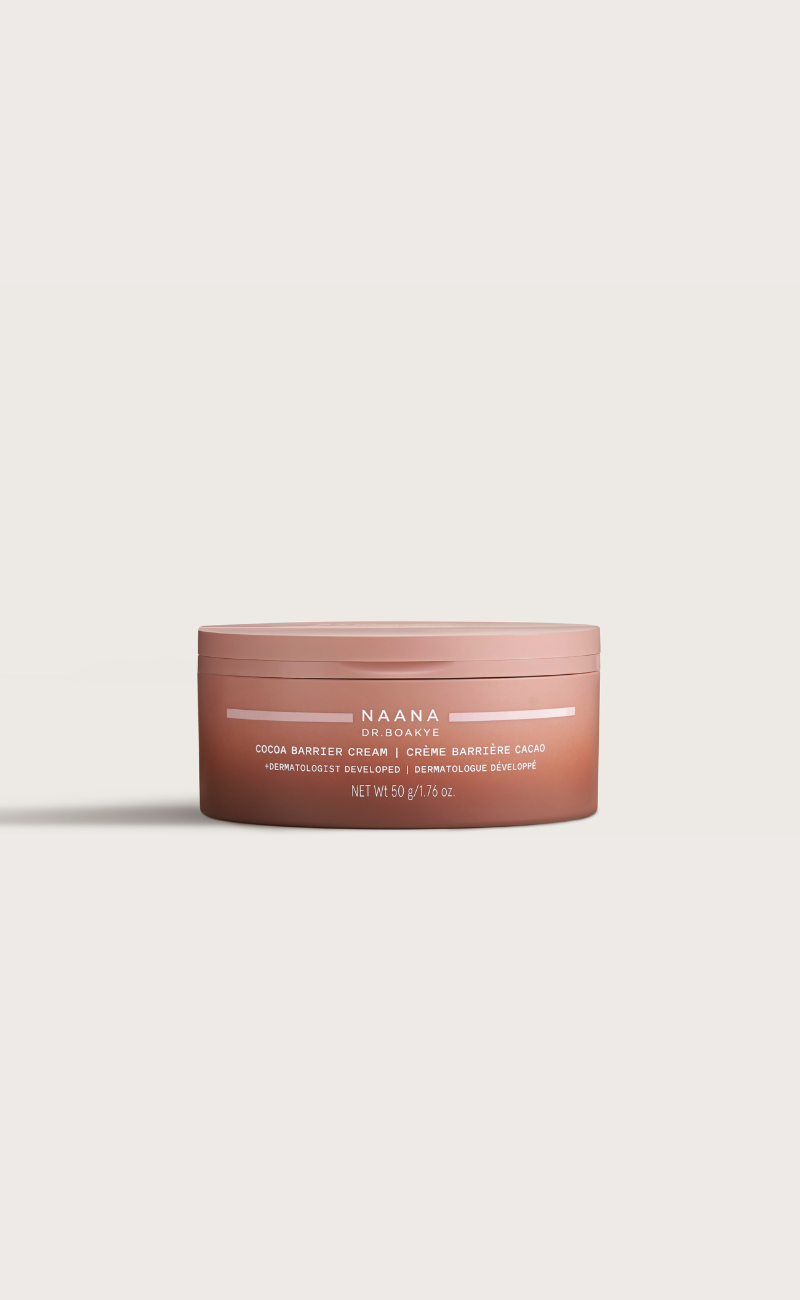
Daily Moisturizer: Cocoa Barrier Cream
Stress depletes your ceramides and disrupts moisture retention. The Cocoa Barrier Cream was formulated to rebuild what stress tears down, replenishing the barrier with a blend of six bioavailable peptides, ceramides, shea butter, and aloe, while niacinamide works to calm inflammation and even stress-related discoloration.
Antioxidant-rich cocoa extract shields skin from environmental stressors, while bakuchiol, a gentle plant-derived retinol alternative, supports cellular renewal without irritation. Clinically proven: 96% of users reported healthier skin after just four weeks.
Niacinamide | Ceramides | Bakuchiol | Cocoa Extract | Licorice Root | 6 Peptides
Shop Now: drnaanabeauty.com/products/dr-naana-boakye-cocoa-barrier-cream ($75)
|
Weekly Treatment: Cocoa Brightening Gel Mask
When stress triggers excess melanin production, dark spots deepen and skin tone becomes uneven. The Cocoa Brightening Gel Mask is a triple-action treatment that targets hyperpigmentation at the cellular level, using tranexamic acid and tetrapeptide-30 to interrupt melanin synthesis directly at the source.
Mandelic acid and lactic acid gently resurface the skin while eco-friendly jojoba beads physically lift away dull cells, leaving skin visibly brighter after just one use. Use one to two times weekly. In clinical studies, 88% of users noticed increased radiance after just four weeks.
Tranexamic Acid | Mandelic Acid | Lactic Acid | Cocoa Powder | Licorice Extract | Jojoba Beads
Shop Now: drnaanabeauty.com/products/dr-naana-beauty-cocoa-brightening-mask ($60)
|
Stress awareness is not just about protecting your mental health. It is about protecting your skin too. The two are deeply and biologically connected. When cortisol rises, your barrier weakens, your dark spots deepen, and your skin loses its glow. When you bring stress down, your skin begins to recover.
This April, give yourself permission to slow down. Breathe deeply. Step outside. Put the phone away. And support your skin with the clinically proven ingredients it needs to repair and defend itself, because glowing skin is not just a skincare story. It is a wellness story.